
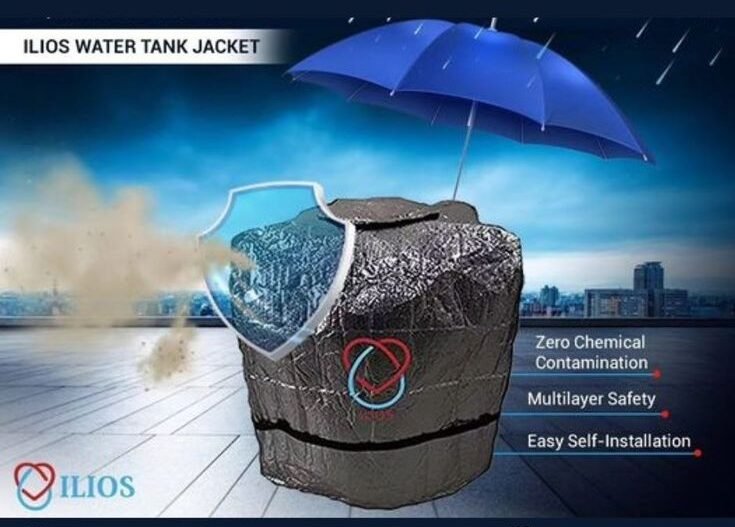
Hot water plays an essential role in our lives whether in houses, apartments, hotels, offices, hospitals, and other commercial buildings. Energy must be supplied to maintain the required temperature of the water in the water heaters. But some of this energy may get lost because of the tank’s temperature being much higher than the surrounding air temperature. Such energy loss increases the overall energy use and makes the heating process more complicated.
One of the most convenient solutions to prevent this heat loss is better insulation of the storage tank. Hot water tank jackets represent an extra insulation of the tank to keep the water temperature stable for a long time. It may be very effective for residential and commercial hot water storage systems.
What Is a Hot Water Tank Jacket?
A hot water tank jacket is an insulating enclosure designed to cover a hot water storage tank. Normally, it consists of insulation material enclosed in a jacket. The insulation will help to prevent heat losses from the heated tank surface to the surrounding atmosphere. The only purpose of this device is to limit heat losses from the tank. Since heat losses will be limited, there is a lower chance of requiring more heating actions to ensure that the water stored in the tank remains heated. The construction of a hot water tank jacket depends on various conditions such as size and shape of the tank, operating temperature, location of installation, among others.
How Does Tank Insulation Reduce Heat Loss?
Heat will always flow from the warm point to a cool point. The water tank is full of water which is hotter than the surroundings. With insufficient insulation, heat will slowly move through the surface of the water tank and escape to the surroundings. An insulation jacket offers another level of resistance to heat movement. It is not implying that heat loss will become zero but it may lower the unnecessary heat loss. It will depend on various aspects such as the thickness of the insulation, quality of the insulating material, the way the jacket fits the water tank, temperature of the water tank, temperature of the surrounding and the state of the water tank insulation. In cold areas, the temperature difference between the water tank temperature and the surrounding is big.
Key Benefits of Hot Water Tank Jackets
- Firstly, it provides enhanced heat retention. If heated water takes longer to cool down, then there would be less energy used in keeping the water at a specific temperature.
- Secondly, there is system efficiency. There will be lesser heating cycles since the heat will not be lost much in the process. However, the efficiency achieved will depend on the entire system.
- The hot water tank jackets will provide better comfort in terms of maintenance of a constant water temperature between uses.
- It will serve as an extra protective layer on the outside of the tank. The degree of protection it will offer will depend on the type of jacket and the environment where it will be installed.
- In case of commercial establishments, the importance of insulation will increase. This is because the tanks are likely to be larger and there is a continuous demand for the hot water all day.
Where Are Tank Jackets Commonly Used?
There are many places where one might install the tank insulation. These include residential spaces such as houses, flats, villas, and even buildings which have centralized hot water tanks.
Among the commercial applications are hotels, guesthouses, restaurants, offices, schools, hospitals, gyms, and any other establishments where one is using the tank for heating water.
It is important to look at the installation environment. This could be because a tank installed in a cold utility room, a basement, a service area, or partially exposed area may lose heat differently from an installation in an indoor environment.
It is necessary to take into account some factors before choosing an insulation jacket.
Key Takeaways
- Tank jacket is a sensible option for insulation which will assist in reducing the rate of heat transfer from a hot water tank.
- Hot water tank jackets can provide effective insulation to maintain the temperature of water inside the tank, cut down standby heat loss and ensure that water heaters function efficiently.
- Jacketing material needs to be compatible with the size of the tank, operating temperatures, installation location and safety considerations.
- Insulation needs to be checked prior to installing any additional layer since installation is crucial due to potential problems with effectiveness.
- Commercial installations may benefit greatly from insulation due to increased standby heat loss.
Frequently Asked Questions
1. What is the purpose of hot water tank jacket?
The primary function of a tank jacket is to provide insulation around a water tank reducing heat dissipation from the tank to the surroundings.
2. Can tank jackets help conserve electricity usage?
Tank jackets can help conserve electricity by reducing heat losses and thereby reducing the energy consumed to maintain the water at certain temperatures. Electricity usage is highly dependent on the heater, insulation and other surrounding factors.
3. Is a tank jacket appropriate for residential use?
Tank jackets are applicable in many residential storage water heaters as long as the jacket is compatible with the water heater and does not cause any interference with the operational mechanisms of the heater.
4. How do I determine the right size of a tank jacket?
Determine the dimensions of the tank including the height and diameter and compare it with the sizing details provided by the manufacturer of the water heater.
5. Can tank jackets be installed over existing insulation?
In certain situations, extra insulation may be added; however, compatibility of the heater with insulation should be ensured. Instructions of the manufacturer should be adhered to.


