
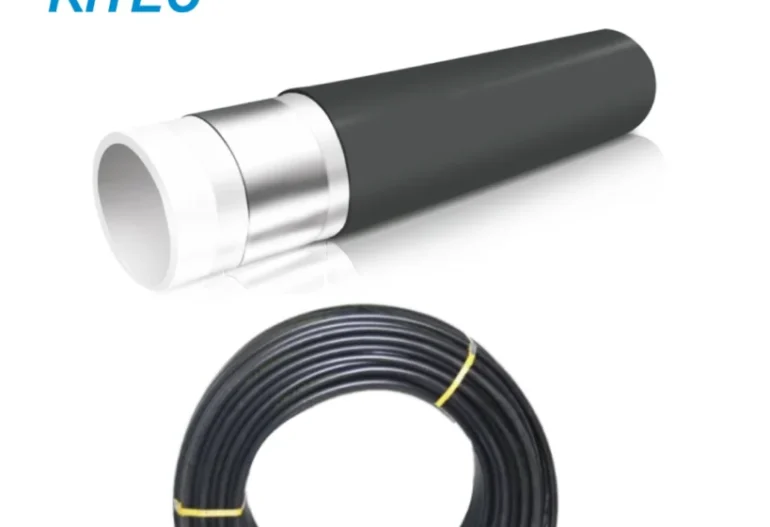
Introduction
All homes, apartments, offices, hotels, and commercial buildings need a proper plumbing system, which delivers clean water to you, drains out waste water, and performs without any leakage or disruption. Wrong choice of pipes and fittings may result in obstruction, water loss, heavy maintenance costs, and constant repair work.
Proper plumbing design starts with analyzing the need of water, layout of the structure, pressure and drainage needs of the building. In the case of India, weather conditions, quality of water, height of the building and monsoon conditions may also play role in selecting the piping and plumbing solution materials.
Understanding Plumbing Needs Before Installation
Every piece of property has different plumbing needs. There may be separate plumbing needs for a single-family property for kitchen, bathrooms, overhead tanks, and garden faucets. A commercial property might have more plumbing needs, such as large supply lines, drain stack installation, pressure control, and maintenance access points.
One needs to calculate beforehand the number of water connections, distance from water source, number of floors in the property, and daily water requirement. A property that uses hard water requires special considerations for scaling purposes.
Comparing Common Pipe Materials
Selection of pipes depending on their intended application is more significant compared to selecting the least costly material. This is because there are varied materials which have differing temperature limits, pressure rating, type of joints and the method of installation.
CPVC Pipes
These pipes are commonly used for both hot and cold water in homes and businesses.They don’t rust easily and can be connected to water heaters as long as the correct steps are taken during installation.
uPVC Pipes
These pipes are mainly used for cold water and drainage systems. They are light and cost less than other types.However, regular uPVC pipes are not good for hot water lines.
PPR Pipes
PPR pipes may be used to transport hot or cold water if the right product is chosen, based on its temperature and pressure ratings. These pipes have heat-fused connections, hence installation needs proper equipment and skilled workers.
HDPE Pipes
HDPE pipes are flexible and used in water supply underground, distribution externally, and some drainage systems. The right choice is based on pressure rating, diameter, and the purpose of the pipe.
- Material
- Application
- Consideration
- CPVC
- Hot and cold water
- Temperature and pressure rating
- uPVC
- Cold water and drainage
- Product grade
- PPR
- Hot and cold water
- Skilled fusion joining
- HDPE
- Underground supply
- Fusion quality and pressure rating
Practical Ways to Improve Plumbing Performance
- A properly designed installation could prevent water wastage and facilitate future repair works. First, use appropriate pipe dimensions according to their expected capacity instead of installing pipes arbitrarily. Small supply pipes would cause low water capacity whereas inadequately designed drain pipes would cause poor discharge and clogs.
- Second, install isolation valves at appropriate places in order to stop individual parts for repair works without turning off water across the entire property.
- Third, keep drain pipes at the right gradient and create points of access wherever necessary. Avoid installing unnecessary bends that make cleaning difficult.
- Fourth, ensure that exposed pipelines are well-protected against physical damages and sunlight whenever there is a need for such protection. Properly support and accommodate the pipelines where necessary.
- Finally, conduct a pressure test or leakage test on pipes prior to concealing them. This could help identify any defect that could be repaired without demolishing the entire structure.
Property-Specific Planning in India
Problems vary based on the type of property and its location in India. For northern zones, the variation of temperature levels impacts the exposed installation. Hard water areas pose a threat of scale accumulation in plumbing fixtures and connected equipment. Poor rainwater disposal planning during monsoon seasons leads to waterlogging problems at property’s basement, foundation, and entrance.
In case of apartments and commercial properties, planning should take into account the coordination of plumbing pipes with the layout of electrical conduit, structural members, waterproofing, and interior finish layers.
Sustainability concerns are also important to note. Efficient fixture operation, leak reduction strategies, connections for rainwater harvesting, and good reuse system planning help in ensuring minimal water wastage when done within the requirements of local regulations.
KK Tech Eco Products offers plumbing-oriented solutions to residential and commercial needs. Check out the corresponding piping solutions service page for more information. You can also make the connection between this article and the company’s related drainage & sewage pumps, pressure pumps, and rainwater harvesting pages.
Key Takeaways
- Choose materials for piping based on its use and not based on cost.
- Compare CPVC, uPVC, PPR, and HDPE based on their use and ratings.
- Factor in the labor cost, fittings cost, testing, and repair cost into the budget.
- Make plans for slopes for drainage, pressure management, and maintenance.
- Conduct tests for the hidden pipework before you enclose the area.
- Design considering monsoon drainage, quality of water
Frequently Asked Questions
1. Which pipe would you recommend for domestic plumbing in India?
It depends on many factors including application of the pipe. CPVC pipes are usually applied for hot and cold water. uPVC and HDPE are used for certain cold-water or drainage applications.
2. What is the difference between CPVC and uPVC?
CPVC pipe is meant to be applied for hot and cold water application as per their ratings. Ordinary uPVC is used for cold water and drainage.
3. What is the cost of plumbing installation?
It is different for each property, depending on the size of the property, number of outlets, material and labour cost, routes and whether it is new construction or existing property.
4. How can I avoid plumbing leakages?
Use compatible fittings, experienced plumber, proper joining technique, right pipe support. Check the plumbing before concealing it.
5. Which pipes can be used for underground water supply?
HDPE pipe can be one of the options, but there are many other things that have to be taken into account before deciding on the proper type of pipe.


