
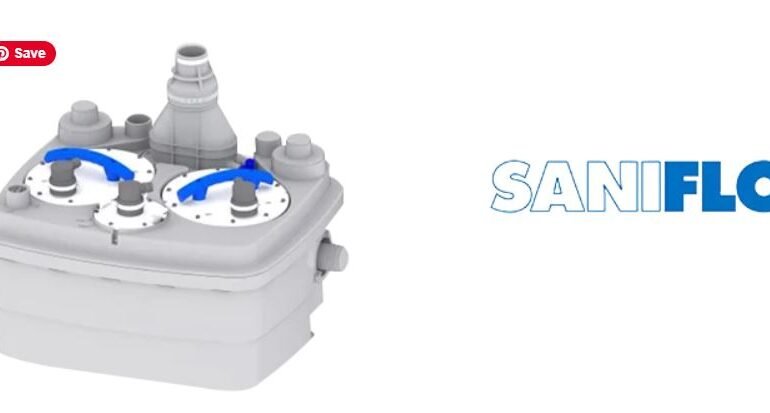
Reliable wastewater disposal is critical for commercial buildings. The basement toilets and washrooms may not be able to dispose of waste using gravity flow, and hence pumping will enable the discharge of wastewater at a designated point. This manual is about such applications in Indian buildings.
What Is a Commercial Macerating Pump?
The commercial macerating pump has a cutting mechanism that breaks down acceptable solids prior to discharging the waste through a discharge pipe. From the construction, it can be used for servicing one toilet or more approved devices. Macerating pump systems have components such as storage tanks, control units, and alarms.
The choice of the right macerating pump is determined by the sewage, flow rate, lifting capacity, and piping direction. Commercial macerating pumps require proper planning of their capacities.
Where Are These Pumps Used?
In Punjab and all of India, basement offices, repurposed hotels and warehouses could be situations where the bathroom is under sewage level or too far from the main sewer line.
Some possible uses are:
- Office bathrooms on basement or lower-ground levels.
- Hotel, restaurant or shopping complex facilities that will have repeated usage.
- Warehouses and workshops that will have staff bathrooms far away from the main sewer line.
- Repurposed structures that require gravity drainage work.
- Businesses that will hook up approved fixtures into the lift station.
- Food waste, hot water, chemicals and industrial discharge may be an entirely different situation. Make sure you know what type of waste can be disposed of.
Understanding the Cost
Cost is influenced by capacity, fitting, head required, length of pipes, controls, and electricity works and accessibility. The cost of the single toilet pump is different from that of the duplex pump that serves more than one washroom.
Ask for costs of equipment, piping, electricity works, plumbing works, commissioning and taxes. Enquire about the alarms, valves, serviceability, warranty and spare parts required. For a commercial macerating pump, ensure the service is well documented.
Provide a site specification that includes the floor level, discharge distance, fittings, peak demand and electricity requirements. Provide the floor plan or pictures to get an accurate quote.
Do a comparison between the commercial macerating pumps under similar conditions. Do not compare only the horsepower of the pumps but ask for the flow rate and total dynamic head of the pump.
Macerator Pump Versus Conventional Sewage Pump
A macerator breaks up the solids to an appropriate size before pumping. A normal non-clog sewage pump allows the solids to pass through an impeller within its specified free-passage. Neither of them is ideal for all properties. Commercial macerating pumps need to be matched to the peak demand.
The macerator may be the ideal choice if a toilet exists at the point below sewer level. The non-clog sewage pump may be the better alternative when dealing with large sewage flow.
Compare the suitability of both the wastes, their flow and head, handling of the solids, pipe sizes and the operating hours. Ask for the pump curve and its duty confirmation in writing.
Important Factors Before Buying
List toilets, washbasins, showers, sinks, and cleaning stations. Verify connections allowed and if grease or hot water requires special treatment.
Calculate flow rate and dynamic head, taking into account vertical lift and friction losses because of length of pipe, elbows, and valves. Check the design against that recommended by the manufacturer.
In some cases, alarm systems, automatic controls, and backups may be required. Although duplex pump operation may be rotated, sizing and maintenance remain important. Make sure that personnel have access to the alarm system.
Installation and Maintenance Checklist
- Prior to installing, ensure that a qualified plumber does the following:
- Verify loads of fixtures, peak demands and compatibility of wastewater.
- Check flows, total head, diameter of pipes and manufacturer’s limitations.
- Check electrical supply, earthing, overload protection and location of alarm.
- Ensure safe access to isolate, check and remove equipment.
- Test the pump and show the operator how to act in case of alarm.
- Maintain manual and service records. Follow the inspection schedule and look for noise, alarms, slow discharge, leakage or electric trip. Do not flush wipes, cloth or plastic unless they are allowed.
- Never repair any powered equipment until safely isolated from electrical connection. Repairs can only be made by trained personnel. Ensure safe access to the equipment and do not store any materials above access covers.
Key Takeaways
- Select a pump depending on the nature of waste water and loading of fixtures.
- Do not look only at the horsepower; think about flow and head.
- Compare macerating pumps to clog-proof sewage pumps and lift stations.
- Think of total cost including installation, wiring, alarms, and maintenance.
- Ensure that you have easy access, correct installation, and a maintenance program.
Frequently Asked Questions
1. What do macerating pumps do?
These break down solid waste and then pump out wastewater to the drainage line where there is a challenge of using gravity, such as from a basement toilet.
2. Can a macerator work for more than one toilet?
There are packaged units which cater for several toilets. Ensure that connections are legal and that you do not exceed maximum flow and duty.
3. Will macerator pumps be appropriate for basement toilets?
Yes, but according to how well suited the unit will be based on the requirements for head and flow.
4. What is the difference Between a Macerator and a Sewage Pump?
A macerator chops up suitable solids before pumping. The normal sewage pump pumps the solids by means of a special passage in the impeller. It all depends on the kind of wastewater and the design of the system.
5. When Should a Commercial Unit Be Serviced?
Service the equipment according to the recommendations of the manufacturer and the kind of wastewater involved.
Planning a Commercial Drainage Project
KK Tech Eco Products can be helpful in finding out the suitable drainage system. See their web page information on basement drainage systems, washroom macerating pumps, and drainage & sewage pumps. Submit your floor plan and fixture details before selecting the model.


