
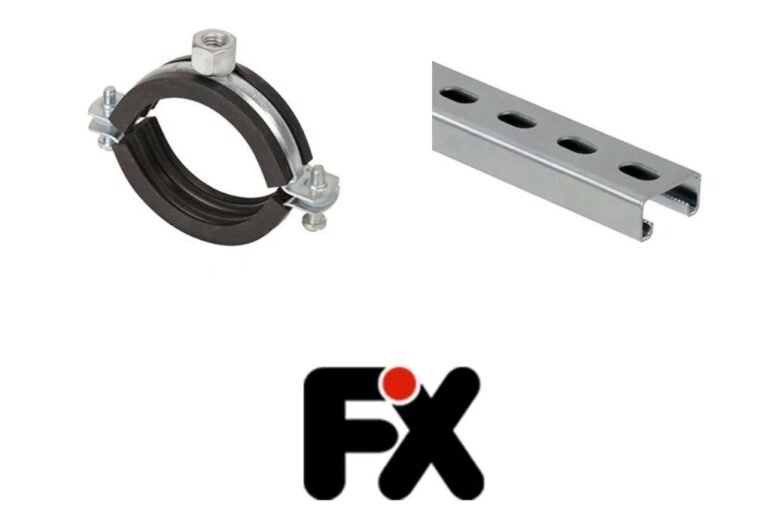
When designing your plumbing system you will want to make sure that your water supply and drainage are all properly secured into place. This can be made easier by using FIXOTEC Modular Pipes alongside suitable fixing systems. If your pipes aren’t properly secured you will run into issues such as piping sagging, vibrating and rubbing. This can cause extra wear on your fittings and can make repairs harder. Having proper fixings is an important part of any reliable plumbing system.
Why are Pipe Fixings Important?
Fixings are important to consider as Indian properties will often have limited service areas. In apartments piping can be suspended or within a shaft. Commercial buildings will often have multiple services running through common corridors. Fixings need to be appropriate for the piping material, diameter, actual weight and working conditions. Allowing for movement within the design. Starting with measuring and drawing up.
Understanding Modular Fixing Systems
A basic fixing will hold the piping at one point. Modular fixing systems provide a more organised way to fix the piping by using pipe fixing systems, rails, fittings and accessories. Slotted rails can be used to create fixing points and allow for movement along the channel. Useful if multiple services are running.
The FIXOTEC range of pipe fixings come in three versions; Regular, Heavy and Original. They also have rails. The fixings have double screw locking, captive fixings, non slip lining, EPDM insulation lining, fully welded connection and galvanized zinc coating. You would need to check the technical data for each model. The FIXOTEC Modular Pipes should be chosen based on the actual design.
Home Fixings
Piping will often require fixings in pump rooms, kitchens, bathrooms, ducts and external routes. Using fixings will ensure the piping stays straight and is easier to locate during repairs. Choosing the right liner can reduce the issue of the piping touching.
Multi storey buildings need to be planned carefully. Consider the actual weight of the piping, fixing points and movement. If they are on terraces or near parking areas consider the moisture and strength of the substrate. Even with protective coatings in place, regular inspections remain essential. The FIXOTEC Modular Pipes should be chosen for all routes.
Commercial Fixings
Often offices, hotels, hospitals and factories will have lots of services in limited ceiling or plant room areas. Using rails can help create organisation with piping, ducts, conduits, trunking and cable trays. Having an organised layout will help during inspection. All future changes should be checked for loading.
If there are industrial lines to consider vibrations, dynamic loads, expansion points and equipment joins should be considered. A light duty fixing shouldn’t be used for a heavy duty pipeline. An engineer should be consulted to ensure the fixing can support the loading, spacing, anchoring and structure.
Individual Fixings vs Modular Fixings
Using individual fixings are great if you only have a few simple runs of piping. They are a familiar option. However using multiple fixings can cause busy service areas.
If you are considering using the FIXOTEC Modular Pipes then the rails can help create organisation with the fixings. All components need to be compatible. The overall cost of installation should be considered (anchoring, accessories, labour and maintenance).
Site Conditions
There will be differences in conditions between internal rooms, damp basements and external rooftops. In Punjab and surrounding areas consider the moisture, base material, access and nearby services. In older properties check that the concrete, masonry and/or steel can support the anchoring.
Ensure you know what piping material, diameter, contents, actual weight, routing, insulation and likely movement. Check manufacturers recommendations. Ensure plumbing drawings are coordinated. Don’t assume uniform spacing.
Installation and Purchase Checklist
Ensure drawings are correct, routing, spacing and fixing points. Ensure fixings won’t cause damage. Use the correct anchoring and fixing. Ensure there is gap for insulation, valves and access. Never fix to weak finishes or ceiling grids.
Once installed the pipework should be straight, fixings correct, no contact and no damage to the coating. Ensure there isn’t any restriction to the intended movement. Document.
Ensure all suppliers have the same drawings and piping schedule. Request a price for the fixings, rails, connections, anchoring, labour, delivery and taxes. Ensure technical support, availability and compatibility is considered. Using incorrect parts can cause delays.
A realistic cost should be considered. Consider how long the services are expected to last in the building. Using accessible fixings can make inspection and replacements easier. If the routing is not organised you may need to cut into the ceiling/walls during repairs. Keep product data sheets with the building handover. This helps the facility team know what has been installed and enables them to plan inspections.
Key Points
- Choose the correct size for the piping. Consider the material, actual weight and site conditions.
- Consider using modular rails to create organisation with the fixings.
- Compare the Regular, Heavy and Original using current technical data.
- Check anchoring, exposure to corrosion, insulation gap and access.
- Consider the overall installation cost.
- Inspection.
FAQs
1. What are Modular Pipe Fixings used for?
FIXOTEC Modular Pipes are used to secure pipework. They can also be used to organise services. Ducts, conduits and cable trays may also be supported using rails and accessories.
2. Can FIXOTEC Modular Pipes be used in homes/apartments?
They can be considered if the model, loading, fixing and installation details are correct for the residential design. Speak to a qualified installer.
3. What is the Difference Between Regular and Heavy?
They are different versions for different uses. Check current manufacturer data for dimensions and loading.
4. Can vibration and fixing noise be reduced by lining?
The application of EPDM lining serves to effectively mitigate vibration and diminish contact noise. This will depend on the flow, installation and building structure.
5. Can Modular Fixings be used outside?
The product information states they can be used both internally and externally. They have a galvanized zinc coating. Check they are suitable for the exposure and maintenance.
KK Tech Eco Products can help you understand your requirements and which FIXOTEC Modular Pipes components are suitable. Use our Modular Pipe Support System page with your drawings and piping schedule.


